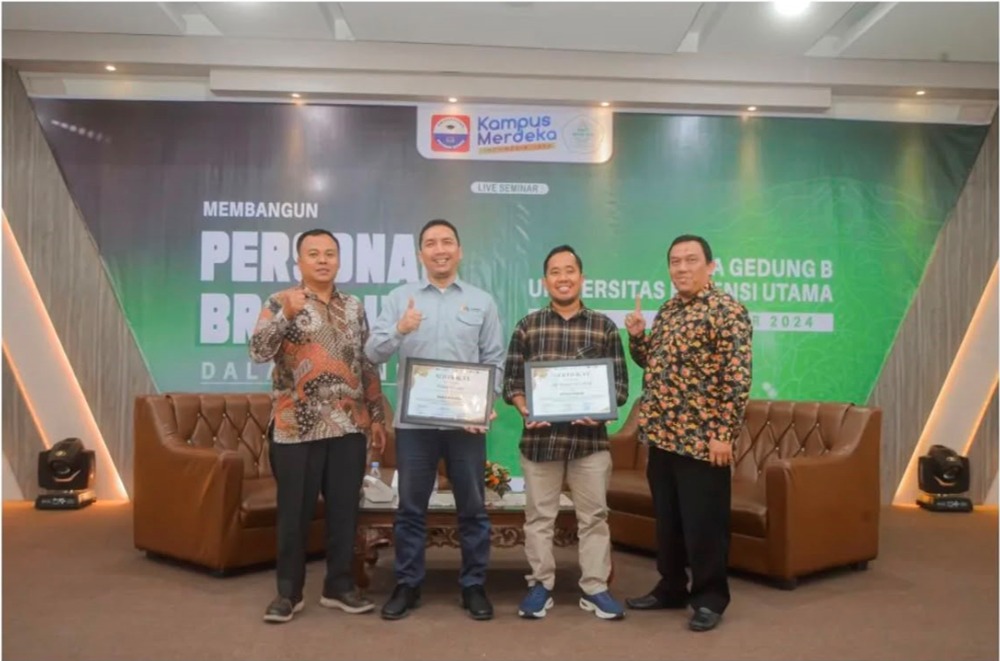
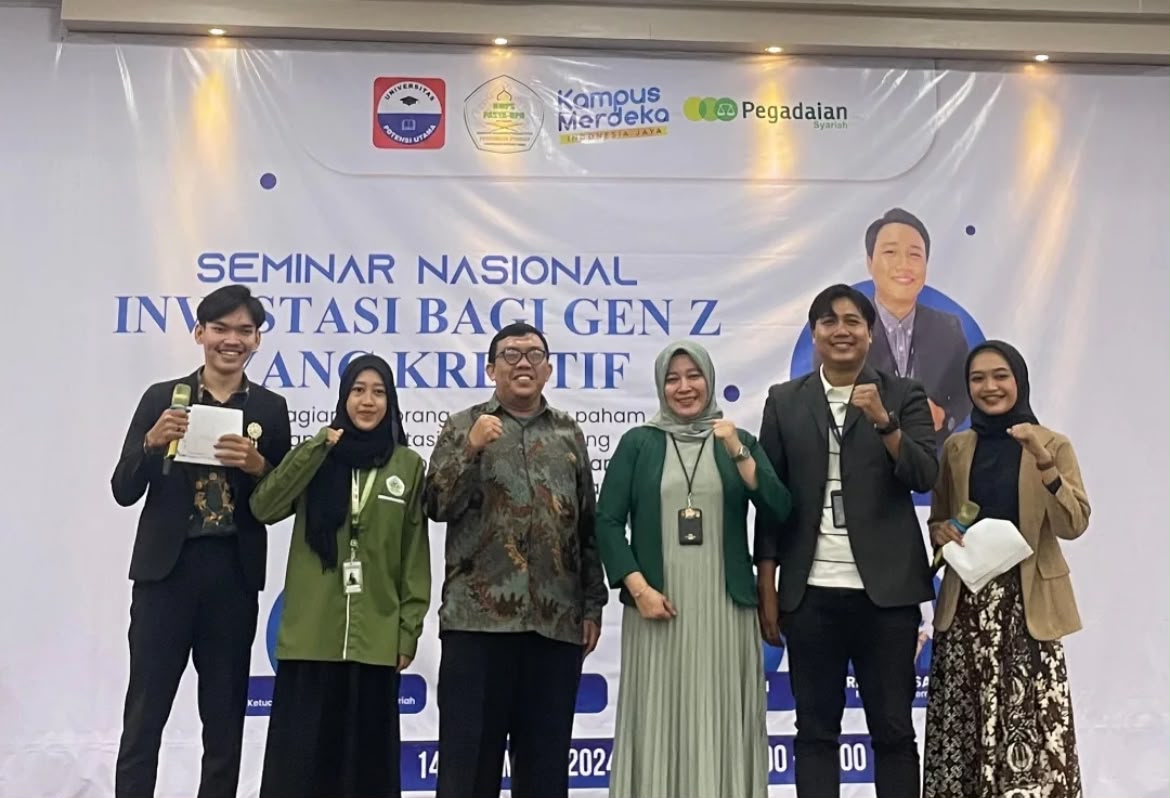
Medan, Universitas Potensi Utama – The global palm oil industry continues to face increasing demands for operational efficiency, cost transparency, and sustainability compliance. In response to these challenges, Universitas Potensi Utama (UPU) conducted a Community Service Activity (PKM) titled "The Role of Accounting in Enhancing Business Efficiency in the Palm Oil Industry." The event took place on Thursday, August 7, 2025, starting at 08:00 AM WIB until completion.
The activity was attended by a diverse group of participants, including university students, palm oil industry players, as well as administrative and financial staff. Their presence reflected the growing interest in understanding how accounting can serve as a strategic tool to improve business performance in one of Indonesia's most vital commodity sectors.
The implementation team consisted of four distinguished UPU lecturers: Emi Masyitah, S.Pd., M.Ak; Siti Kadariah, S.H.I., M.E; Aisyah Azhar Adam, S.E., M.M; and Mutia Rahimanda.
Addressing Key Industry Problems
The community service activity was designed to answer two fundamental questions within the palm oil industry. First, how can accounting practices contribute to improving business efficiency under the regulatory and supervisory framework of the Malaysian Palm Oil Board (MPOB)? Second, how can the implementation of accounting methods and tools—such as cost budgeting, Activity-Based Costing (ABC), variance analysis, and Enterprise Resource Planning (ERP) systems—assist the palm oil industry in identifying inefficiencies and reducing operational costs?
Objectives of the Activity
The PKM had two primary objectives. The first was to enhance participants' understanding of the strategic role of accounting in improving business efficiency and cost control within the palm oil industry. The second objective was to introduce and strengthen participants' knowledge of accounting methods and tools, including cost budgeting, Activity-Based Costing (ABC), variance analysis, and ERP systems, as practical instruments for identifying inefficiencies and reducing operational costs.
Materials Delivered
During the session, participants received comprehensive materials focused on improving business efficiency in the palm oil industry. Key topics included the role of management accounting, cost budgeting and cost control, Activity-Based Costing (ABC), variance analysis, the use of ERP systems, and sustainability accounting with Environmental, Social, and Governance (ESG) reporting. The session was delivered through a combination of lectures, case study discussions, and interactive Q&A to ensure participants could directly apply the concepts to real-world industry contexts.
Conclusions and Key Outcomes
Based on the analysis of the implemented community service activities, two main conclusions were drawn.
First, the activity confirmed that accounting plays a strategic role in enhancing business efficiency in the palm oil industry. This is achieved by supporting cost control, performance evaluation, and informed managerial decision-making through tools such as cost budgeting, Activity-Based Costing (ABC), variance analysis, and ERP systems. Participants gained practical insights into how these instruments can help identify waste, optimize resource allocation, and reduce overall operational costs.
Second, the activity highlighted that the integration of sustainability accounting and ESG reporting strengthens transparency, accountability, and compliance with sustainability standards. This integrated approach contributes significantly to long-term business sustainability and improves stakeholder trust in the palm oil industry. Participants understood that efficient business operations are no longer solely about cost reduction but also about responsible and transparent management practices.
Commitment to Sustainable Industry Development
Through this international-themed PKM, Universitas Potensi Utama demonstrates its commitment to supporting the palm oil industry—not only at the local level but also in alignment with global standards such as those set by the MPOB. UPU continues to position itself as a higher education institution that bridges academic knowledge with real industrial needs, particularly in the fields of accounting, management, and sustainability.
The university hopes that this activity will inspire further collaboration between academia and the palm oil industry, ultimately contributing to a more efficient, transparent, and sustainable palm oil sector in Indonesia and beyond.
About Universitas Potensi Utama
Universitas Potensi Utama (UPU) is a higher education institution committed to producing excellent and character-driven graduates who are ready to contribute to society through innovation and knowledge-based community service.
 Indonesia
 English